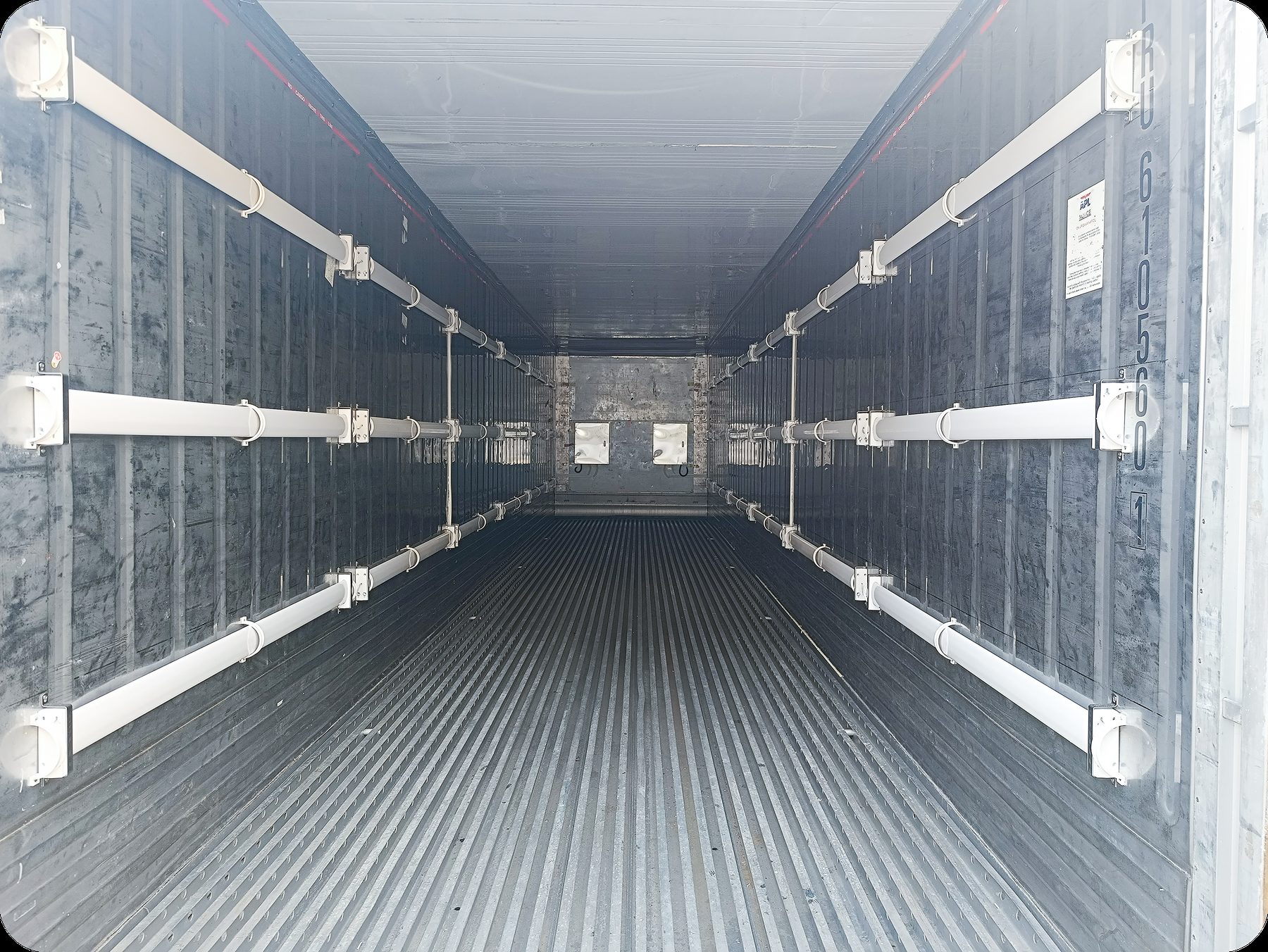
Sea containers
20ft and 40ft reefer, minus eighteen to plus twenty five, with soft freeze mode holding around zero. Your export lane, drop in.
Malaysia to China. Fresh, by sea.
One container, minus three degrees, no ice. Own it outright, or rent a season while you prove the lane.
Three days in the air. Hours to sell on arrival.
Ten days at sea. Fifteen to twenty days to sell.
Per lane, per shipment. The fruit arrives fresh either way.
Documented on the Guangzhou to Malaysia lychee lane at five tonnes.
Sea freight is scaled from the documented lychee lane at RM14,000 per five tonnes. Your lane, your fruit and your season will differ. Ask and we will quote the real number.
The fruit arrives perfect and the freight invoice eats the profit. You are running a logistics company that happens to sell durian, and the airline is your real business partner.
Liquid nitrogen, whole fruit or pulp, cheap to ship. Then your buyer opens it: dull skin, soft shoulders, ice through the flesh, flavour flattened. You are now selling a commodity, and you compete on price forever.
Standard reefer at plus two. Ten days at sea, then however long clearance decides to take. By the time the doors open you are not selling fruit, you are negotiating a discount.
None of those three is the problem. The problem is that nobody ever gave you a fourth option you could own.
The fourth option
Water freezes at zero. That is why cold chain has always been a compromise. Above zero the fruit ages. Below zero, ice crystals rupture the cell walls that hold texture and juice.
Inside a Morandro container an electromagnetic field runs across the cargo from emitter plates on the walls and ceiling. It keeps the water inside the fruit moving, agitated just enough that it cannot lock into ice, even at minus three. Cold enough to stop biology. Warm enough never to freeze.
The plates are mounted on the walls and never touch the cargo. Nothing is applied to the fruit.
Fruit picked, sorted and crated at the orchard. Nothing about the front end of the operation changes. This is the same day you already have.
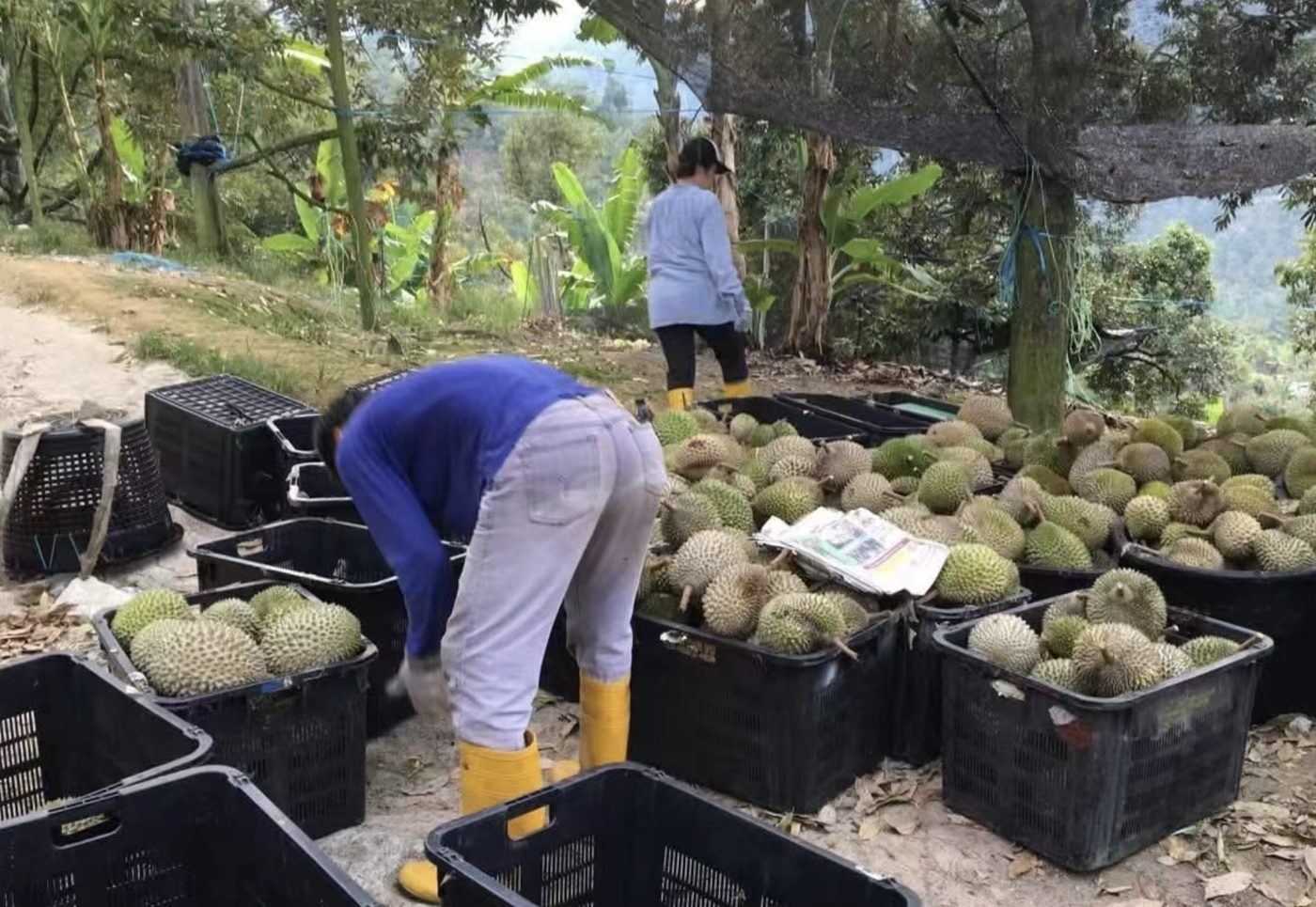
Boxes loaded, doors sealed, hold temperature set to minus three. From this moment the fruit is held in a state ordinary cold chain cannot reach, and the clock that usually runs against you stops.
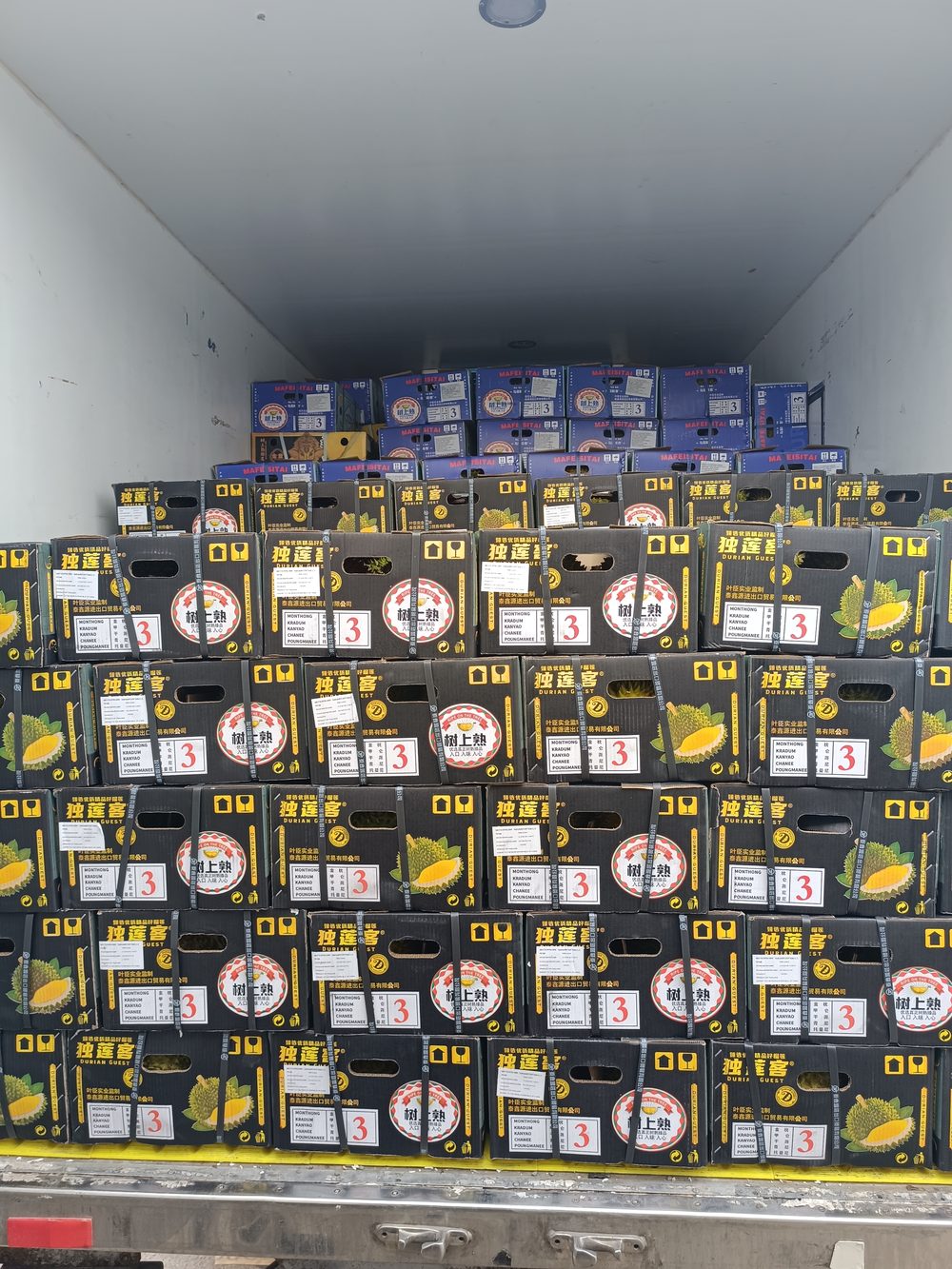
Fifteen days at sea. On any other shipment this is the moment the race begins, because chilled fruit that has already spent two weeks in transit has very little left to give.
This is the part that kills every fresh sea freight attempt, and it is the reason most exporters gave up on the idea. We let the clock run instead of rushing the box out. The fruit sat in clearance and kept sitting.
Cut open beside a Musang King that had been air flown three days earlier. The air freighted fruit measured 32.8. The fruit that spent 33 days in a steel box tested sweeter than the fruit that flew.
Nitrogen frozen, air freighted, and sea freighted in a Morandro container. No chart, no annotation. Look at the flesh.
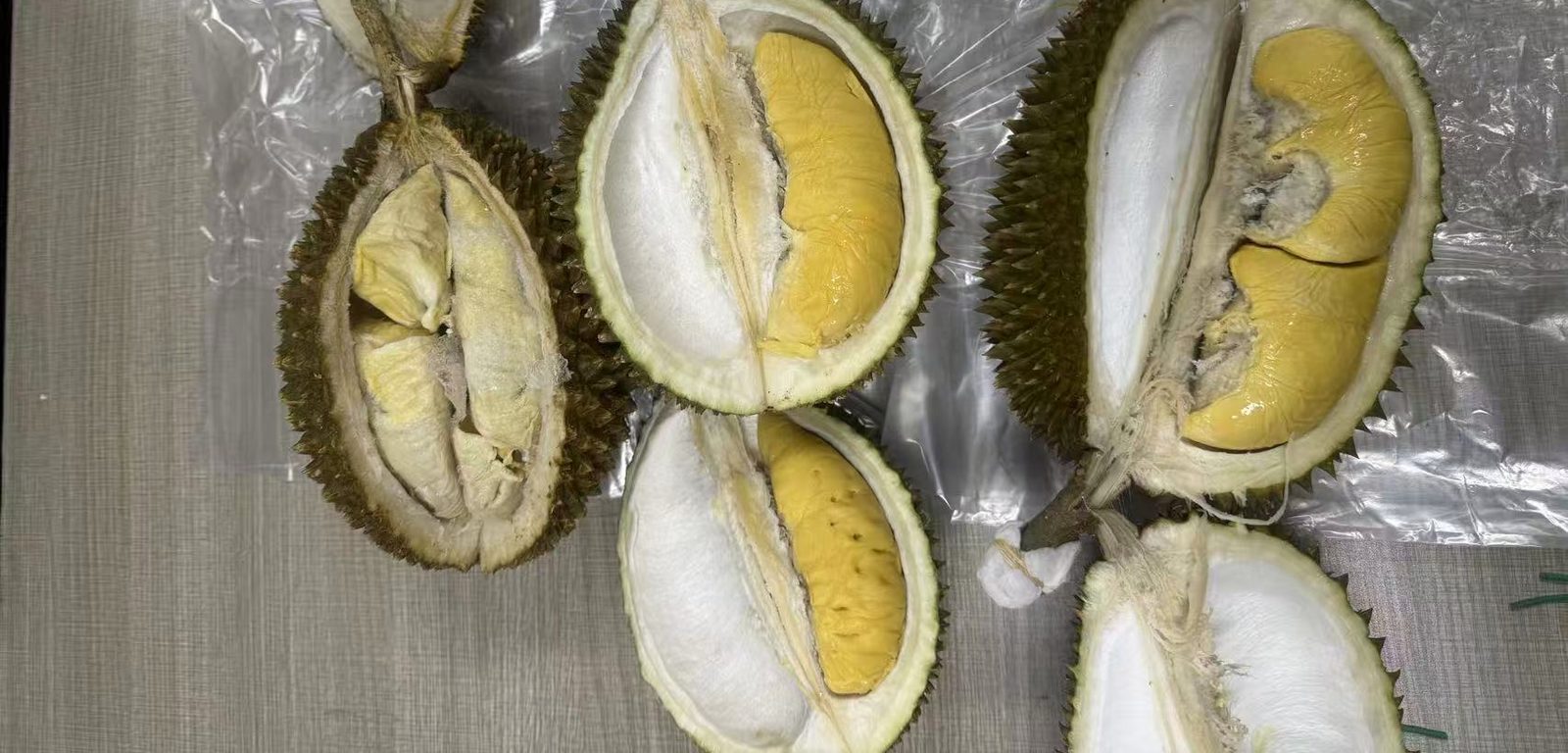
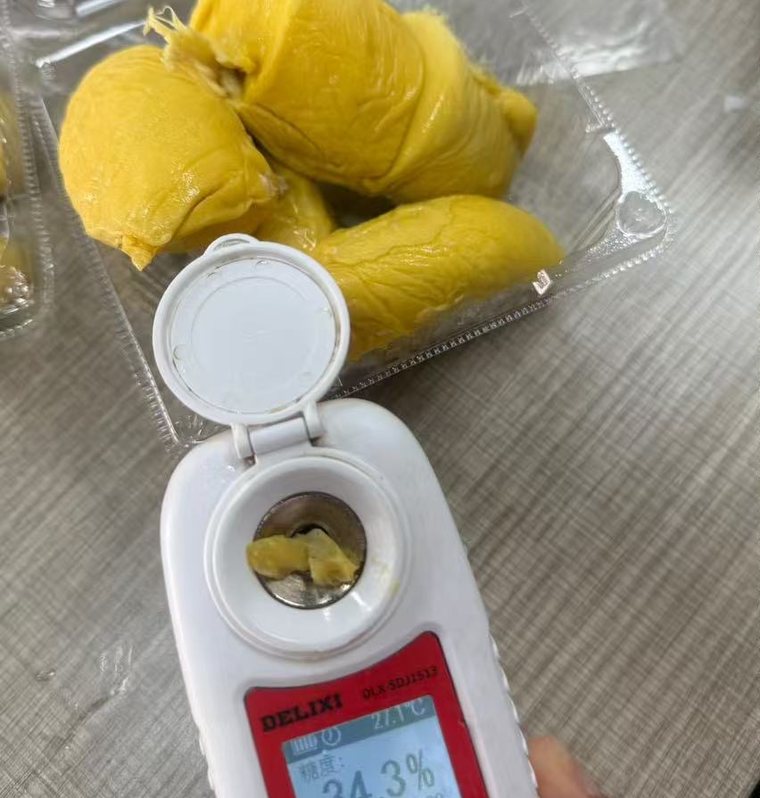
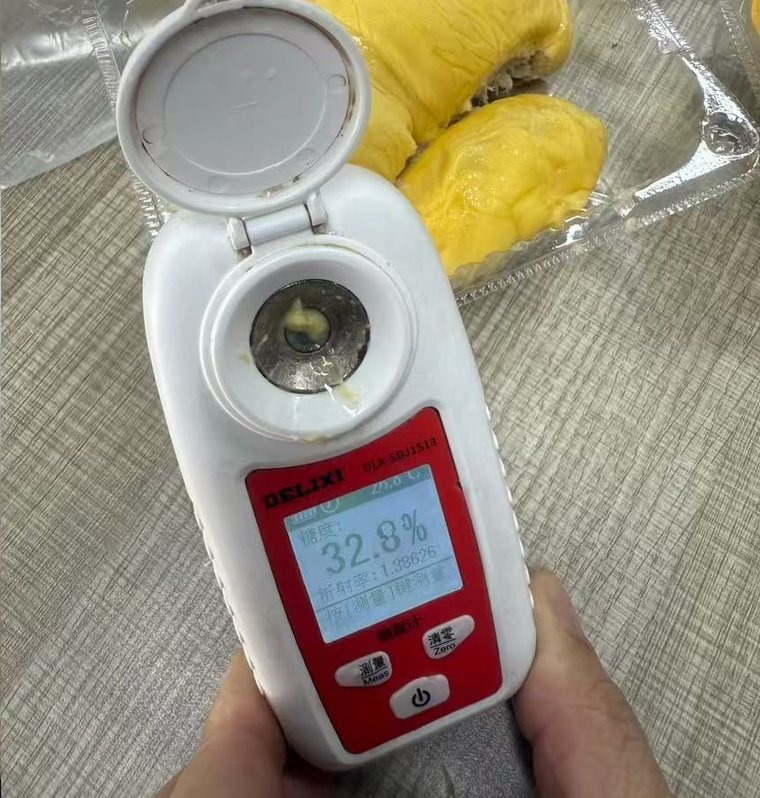
Photographed at the cut.
Not testimonials. Storage records from the Guangzhou wholesale market floor, where nobody cares about the technology and everybody counts the shrinkage.
| Product | Days held | Volume | Shelf life added | Loss |
|---|---|---|---|---|
| Sunshine Rose grape | 40 days | 100 boxes | +20 days | 0% |
| Durian | 30 days | 150 boxes | +15 days | 0% |
| Jackfruit flesh | 40 days | 1,000 boxes | +20 days | 2% |
| Cherry | 35 days | 300 boxes | +15 days | 2% |
| Durian, road freight to north China | 2 trucks / week | 750 boxes / week | +15 days | under 3% |
Days shown are normal retail selling windows, not the equipment's maximum hold. Also on record: lychee at 30 days with rising sugar and stable moisture, shiitake at minus three for 33 days with caps still closed, fresh cut kiwi at 5 days still firm where the control had gone soft.
Where it installs
20ft and 40ft reefer, minus eighteen to plus twenty five, with soft freeze mode holding around zero. Your export lane, drop in.
Post harvest holding at the packhouse. Full size rooms or small back of store units.
The leg after the port, where most exporters quietly lose the fruit they just successfully shipped.
Retail and food service. Hotpot meat holds near fresh for three to five days.
Air freight is a bill you pay again on every shipment. A container is a bill you pay once.
Purchase price quoted by format
A way in, if you are not there yet.
Rental quoted per voyage or per month
The crossover is arithmetic, not opinion: rent while you are proving the lane, and buy the moment the annual rental passes what the unit costs to own. We will do that sum on your real volume and show the working. If renting genuinely stays cheaper for your operation, we will say so.
You should not either. Here is the actual sequence, and it starts with numbers rather than a decision.
If the economics do not work for your product, we say so at step one and you have lost nothing.
Or send your lane and your fruit on WhatsApp and we will come back with a number.
WhatsApp +60 19-277 5210
The rest will still be renting space on somebody else's aeroplane.